Wealthsimple Raises up to CA$425 Million at a CA$13.8 Billion Valuation: What the Round Means
Funding Story
- Company: Wealthsimple (Toronto, Canada)
- Sector: Consumer fintech: chequing and spending, managed investing, self-directed trading and tax filing
- Raise: An equity round of up to CA$425 million (about US$302 million): CA$300 million of new shares plus up to CA$125 million of shares sold by existing holders
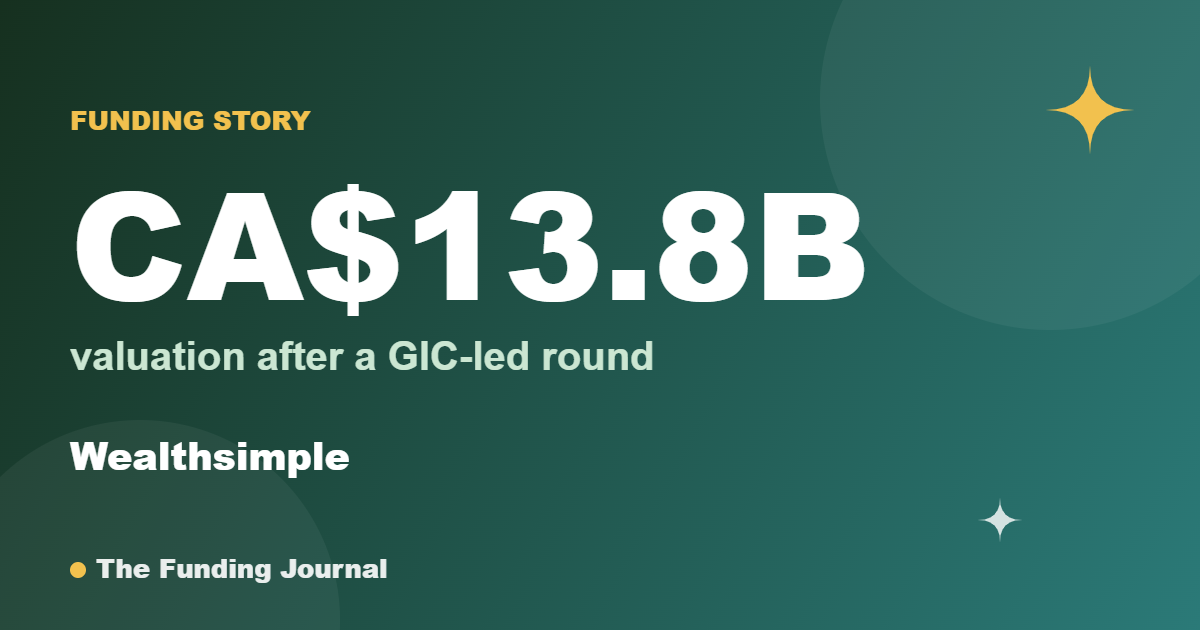
- Valuation: CA$13.8 billion post-money, led by GIC
- Announced: October 27, 2026
- One-line lesson: A fintech that keeps adding products to a growing client base can raise at a higher price even in a slower funding market
What happened
On October 27, 2026, Wealthsimple announced that it had agreed an equity round of up to CA$425 million at a post-money valuation of CA$13.8 billion. Singapore’s sovereign wealth fund GIC is leading the round. Existing investors Power Corporation of Canada, IGM Financial, ICONIQ, CPP Investments and Inovia are taking part. Reuters, reporting the news, converted the total to about US$302.5 million and described it as part of the company’s push into territory held by Canada’s big banks.
The numbers
| Item | October 2026 | October 2025 |
|---|---|---|
| Round size | Up to CA$425 million | Up to CA$750 million |
| Valuation (post-money) | CA$13.8 billion | CA$10 billion |
| Lead investor | GIC | Co-led by Dragoneer and GIC |
| Assets under administration | CA$169.2 billion (September 30, 2026) | About CA$100 billion at the time of the raise |
| Clients | More than 4 million Canadians | Not stated in the sources we reviewed |
The valuation is about 38% higher than a year ago, according to Fintech.ca. Assets under administration, which are the client assets the platform holds and manages, have grown from CA$50 billion in 2024 and CA$100 billion in 2025, as one summary of the filings notes.
Primary and secondary, explained
Only part of this round puts new money into the company. The CA$300 million primary portion is newly issued shares, so the cash goes to Wealthsimple to fund growth. The secondary portion, of up to CA$125 million, lets existing shareholders, including employees, sell some of their shares to the new investors. That money goes to the sellers, not to the business. Secondary sales are a common way for a private company to give staff some liquidity without going public. For more on how that works, see our guide to how secondary markets for private shares work.
The phrase “up to” matters too. The final size depends partly on how much secondary demand there is.
What the company says it will do with the money
- The new capital will fund the company’s next phase of growth, including product expansion and investment in technology infrastructure, according to TechNode.
- It plans to speed up its product roadmap in business banking, everyday spending and chequing, and trading and investment products.
- CEO and co-founder Michael Katchen said the aim is for every Canadian to be able to run their whole financial life on Wealthsimple.
Why investors are backing it
- Scale in client assets. CA$169.2 billion under administration, up from about CA$100 billion a year earlier.
- Breadth of products. The company offers chequing and spending, managed investing, self-directed trading and tax filing. TechNode reports it launched more than 50 products over the past year, including commission-free options and futures trading.
- A shift toward everyday banking. In the second quarter of 2026, new chequing accounts outpaced new investment accounts for the first time, according to TechNode. Everyday accounts tend to bring clients into daily contact with the platform.
- Repeat backers. GIC co-led last year’s round and is leading this one. GIC’s Vinay Yarlagadda said the firm’s conviction has grown since then.
How it fits a slower funding market
The round came days after CB Insights reported that global fintech funding fell 29% year over year in the third quarter to $11 billion, the lowest since the third quarter of 2024. Deal count was 650, about half the figure of a year earlier. Rounds of $100 million or more made up 61% of the total, up from 46% a year before, according to FinAi News. Wealthsimple’s round fits that pattern: money is going to established leaders more than to early-stage companies. It follows the same shape as the large raise by Ramp earlier this month.
Also announced yesterday
- Nevis raised a $70 million Series B to use AI to automate financial advisers’ administrative work, according to Tech Startups. Investors include EQT Ventures, Charles Schwab, QuantumLight, Sequoia Capital, ICONIQ and Ribbit Capital, and the company has raised $110 million in total.
- Mochatrade, a New York-based company offering Indian retail investors leveraged access to tokenised US equities, closed a $6 million seed round led by CoinFund. Coinbase Ventures, Pioneer Fund and Y Combinator also took part, according to FinTech Global.
What we do not know
- Revenue and profit. The financing disclosures give client assets, user numbers and the valuation, but not revenue, net income or cash burn, as one analysis points out. Assets under administration are not income.
- The final round size, which depends on secondary demand.
- The exact split of the new capital between products, hiring and infrastructure.
- What the valuation implies. A private-market price is an agreement between investors, not a market price.
What founders can learn
- Show growth in what you hold for customers. Assets, accounts or volume tell investors more than a plan does.
- Add products around an existing relationship. Wealthsimple’s chequing growth builds on clients it already has.
- Keep your existing investors close. Repeat investors can lead later rounds, and their continued commitment is a signal to new ones.
- Use secondary sales to retain staff. Letting employees sell a portion of their shares can help with retention.
- Read the headline carefully. “Up to” and primary-versus-secondary details change what a round means for the company.
Frequently asked questions
Is Wealthsimple raising CA$425 million of new money?
Not all of it. CA$300 million is new shares issued by the company. Up to CA$125 million is a secondary sale by existing shareholders.
Is Wealthsimple a public company?
No. It is privately held, and the CA$13.8 billion figure is the valuation agreed in this financing.
What is GIC?
GIC is the Singapore government’s investment firm, which manages the country’s foreign reserves. It co-led Wealthsimple’s 2025 round and is leading this one.
Sources and further reading
- Wealthsimple press release: Raises $425 Million at $13.8 Billion Valuation (October 27, 2026)
- Fintech.ca: Wealthsimple announces $425 million round at $13.8 billion valuation
- Reuters via TradingView: Canada’s Wealthsimple raises funds at C$13.80 billion valuation
- TechNode: Wealthsimple raises $302M led by GIC
- FinAi News: Fintech funding hits 2-year low in Q3
- Tech Startups: Startup funding news, October 27, 2026
This story summarizes public reporting and company statements and is for general information only. It is not investment advice or an endorsement of any company or offering. See our disclaimer. Facts last checked October 28, 2026; company figures and terms change. Amounts are in Canadian dollars unless stated.
Published by The Funding Journal Editorial. Practical, sourced writing on fintech, crowdfunding, investment platforms, SaaS and AI, and the stories of founders who raised capital.